Faculty
-

-
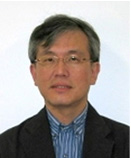
- Kaoru HORIE
- Professor
-
- Profile
- I received a Ph.D. in Linguistics from the University of Southern California
in 1993. I am currently a professor of Linguistics at Nagoya University.
I was formerly at Tohoku University, where I served as the director of
the Center of Excellence (COE) program in humanities and promoted interdisciplinary
studies on language, cognition, brain and typology. My research interest
centers around: (i) a typological and contrastive analysis of complex sentences
and grammaticalization phenomena in Asian and European languages, including
English, Japanese, Korean, Chinese, Khmer, Marathi, Mongolian, Vietnamese,
and (ii) the pragmatics/grammar interface.
-
- Field
- Linguistic typology, contrastive linguistics, cognitive linguistics, grammaticalization
and language contact, pragmatics/grammar interface
-
- Course
- This class situates the Japanese language and its socio-linguistic practices
within the context of recent findings in Linguistic Typology, a discipline
that inquires into language universals and cross-linguistic variation,
and Cognitive-Functional Linguistics.

-
-
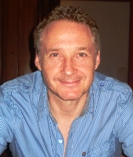
- Jeremy Cross
- Associate Professor
-
- Profile
- I am an Associate Professor in the Graduate School of Languages and Cultures.
I have a Bachelor of Teaching (University of South Australia), MA in Linguistics
(TESOL) with Distinction (University of Surrey) and PhD in Applied Linguistics
(University of Melbourne). I have previously taught at universities in
Australia and Singapore.
-
- Field
- My primary research interest is L2 listening teaching and learning and
I have published related articles in a range of recognized journals including
Language Learning, Language Teaching Research, and Language Awareness.
Aspects of my research into L2 listening adopt a sociocultural theory perspective.
-
- Course
- This course explores L2 pedagogy and learning from the perspective of sociocultural
theory. Underlying concepts such as the ZPD, Activity Theory, and dynamic
assessment will be covered, as well as empirical research which examines
the application of such notions in relation to L2 reading, writing, listening
and speaking.
-

-
- Katsuo TAMAOKA
- Professor
-
- Profile
- I completed my Ph.D. in the area of lexical access by Japanese children
at the University of Saskatchewan, Canada in 1990.
Since then, I have been a lecturer at Matsuyama University, an associate
professor and a full professor at Hiroshima University, a professor at
Reitaku University and a professor at Naogya University from 2009 to present.
I belong to various societies such as Psychonomic Society, the Linguistic
Society of Japan, and Japanese Cognitive Science Society.
-
- Field
- I have specialized in psycholinguistics, the interdisciplinary study of
psychology and linguistics, to investigate how humans are able to acquire,
use, comprehend and produce language. Due to the nature of this discipline,
multiple languages, such as Japanese, English, Korean, Chinese, Turkish,
Sinhalese, etc., are investigated in the search for universal rules for
human language processing. Acquisition of Japanese as a second language
by faculty of various language backgrounds are also covered in my studies.
-
- Course
- The class‘Japanese Psycholinguistics’mainly focuses on the cognitive processing
mechanisms of the Japanese language at the phonetic/phonological, morphological,
phrasal, sentential, utterance and textual levels. Research takes multi-disciplinary
approaches of statistics, experimental psychology and linguistics. Students
obtain an understanding of these multiple, fundamental dimensions to investigate
certain topics in language processing or acquisition.
-
-
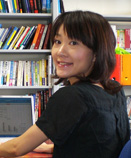
- Remi MURAO
- Associate Professor
-
- Profile
- I received a PhD in Applied Linguistics from Nagoya University in 2009.
My first academic position was as an assistant professor at Waseda University
in 2007, where I taught English to undergraduate students for three years.
Apart from academics, I enjoy playing the violin in an amateur orchestra.
-
- Field
- My primary research area is second language processing. I am particularly
interested in phonological processing in spoken word recognition, and the
mapping of continuous speech sounds onto the mental lexicon. My PhD work
focused on the influence of prosody and formulaicity of language on the
recognition of spoken words.
-
- Course
- This course provides students with a foundation in second language acquisition
research. Topics include theoretical models of SLA, second language processing,
and comparison of first and second language acquisition focusing on sociological,
psychological, and individual factors. Students are required to read the
academic papers scheduled for presentation each week to be able to participate
in discussions.
-
-
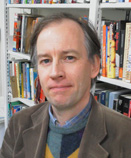
- Edward HAIG
- Associate Professor
-
- Profile
- I am an Associate Professor in the Graduate School of Language and Culture's
Media Professional Studies Department. I have an MSc in Teaching English
as a Foreign Language (Aston University, UK) and PhDs in Ecology (University
of London, UK) and Linguistics (Lancaster University, UK).
-
- Field
- My current research interests include the language of ecology / the ecology
of language; the ideological use of language in Japanese and English news
media; the interrelations between public and private discourses of youth,
crime and class; and the language of radio broadcasting. The two main theoretical
and methodological tools that I use in my research are systemic functional
linguistics and critical discourse analysis.
-
- Course
- This course focuses on three key factors relating to contemporary media:
globalization, power and language. The first of these invites us to take
a comparative approach to the study of media texts; the second alerts us
to the need to think critically about how media and power are related;
and the third suggests that any serious study of media texts must pay careful
attention to language. Through this course students will acquire a widely
applicable set of skills relating to the critical analysis of media texts.
-

-
- Dylan MCGEE
- Associate Professor
-
- Profile
- I earned my Ph.D. in Comparative Literature (Japanese/Chinese) from Princeton
University (2009), and conducted research for my dissertation at Kanazawa
University (2004-2005). ?My principal field of research is Japanese literature
of the Edo period (1603-1868), with a focus on the history of book publication,
circulation and reception. At present, I am writing a monograph on the
history of the Daiso lending library, which operated in Nagoya between
1767 and 1899 and rose to status as the largest commercial lender in Japan.
In addition to several translations of early modern Japanese narrative
fiction and poetry, I have also published articles on the reception of
rental books during the Edo period, the works of Ueda Akinari (1734-1809),
the history of amateur chaban kyōgen performance, and the development of
clock-based narrative time in the popular genres of kibyōshi and sharebon
(1780-1796).
-
- Field
- My principal field of research is Japanese literature of the Edo period
(1603-1868), with a focus on the history of book publication, circulation
and reception. In addition to several translations of early modern Japanese
narrative fiction and poetry, I have also published articles on the works
of Ueda Akinari (1734-1809), the history of amateur chaban kyōgen performance,
and the development of clock-based narrative time in the popular genres
of kibyōshi and sharebon (1780-1796).
-
- Course
- For the Global 30 course, I will be teaching two year-long graduate seminars—Text
and Image in Japanese Narrative and Cultural and Intellectual History of
Japan. The first course is a survey of illustrated narrative in Japan,
from medieval picture scrolls to modern manga. The second is a survey of
Japanese cultural and intellectual history focusing on the early modern
and modern periods.
-

-
- Akitoshi NAGAHATA
- Professor
-
- Profile
- I have MAs in English Studies (Tokyo University of Foreign Studies) and
English (State University of New York at Albany). I have been teaching
at Nagoya University since 1988. From 2011 to 2014, I served as the director
of the Comparative Studies of Language and Culture program.
-
- Field
- My area of study is American literature and culture, with a focus on poetry.
I have published articles on Modernist and contemporary American poets
(e.g., Pound, Stevens, Ashbery, Ginsberg), and post-war American novelists
(Thomas Pynchon, John Barth) and artists (Bob Dylan, Woody Allen), among
others.
-
- Course
- In the G30 program, I am teaching "Literary Modernism and the Avant-garde,"
a course in which participants learn about some of the innovative writers
in the Modernist tradition. In this course, participants will also learn
how to analyze literary texts and study about various issues related to
translation.
-
-
-
- Takashi WAKUI
- Professor
-
- Profile
- I received an MA.in comparative literature from Indiana University and
a Ph.D. in East Asian languages and cultures from Columbia University in
New York.
-
- Field
- I wrote my Ph.D. dissertation on modern Japanese poetry. Since then, I
have published papers in modern Japanese literature, particularly on its
relationship with astronomy and stargazing. I have also translated Japanese
poems into English. In the field of animation studies I have written a
paper on Terada Torahiko and Oskar Fischinger. As a regular attendee at
the Hiroshima animation festival since the mid 90s, I have witnessed the
evolution of the art form in recent decades as well as gained knowledge
about its varied forms around the world.
-
- Course
- The course on world animation will focus on the three major traditions
of animation, namely the U.S.A., Europe and Japan. We will discuss cultural
backgrounds, techniques, relationships with other art forms, etc. Excellent
works are being created today by independent animators armed with the latest
3D technology. But in order to evaluate them properly we need to look back
and study history.
-
-
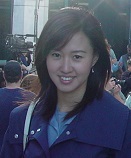
- Sangmi KIM
- Associate Professor
-
- Profile
- I received Bachelor of Arts from Ewha Women’s University (Korea) and MA
and Ph.D in Socio-Information from the University of Tokyo.
- [Homepage] http://sangmikim.jimdo.com/
-
- Field
- Social and psychological impacts of media communication and information technologies (e.g. mobile devices, Internet, TV, etc), Information Behavior (IB), network communication, social and cultural impacts of digital technology, culture.
I am also currently focusing on the digital divide and gender inequalities.
-
- Course
- The course on “Online Communication” mainly focuses on the social and cultural implications of developments
in ICT (Information Communication Technology). From the theoretical and empirical perspectives of online communication,
we will explore the influence of the interactive web-based communication tools such as social networking services (SNS)
on the political process and potential role in promoting social capital. In addition, we will discuss about the issue of negative
social effect of the social media, for example, digital divide, knowledge gap, and gender inequality.
-
-

-
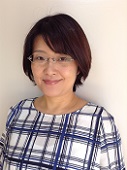
- Chikako MATSUSHITA
- Associate Professor
-
- Profile
- I received my Ph.D in Literature from Nagoya University in 2007 on narratologies
and queer readings of modern American novels. I am the author of Kuia Monogatariron
(Queer Narratologies; Jimbunshoin, Japan, 2009) and the co-director of
Allies (2009). I received the 16th Fukuhara Award for English literature
in 2008.
-
- Field
- Feminist theory, Sexuality studies, Literature and theory, Visual culture,
Subculture
-
- Course
- This course aims to offer critical insights into human sexuality expressed,
viewed and constructed in Japanese subculture. Providing students with
a critical overview of theory and research on gender and sexuality, especially
from the first volume of Michel Foucault’s History of Sexuality, it will
introduce how to analyze “critically” and “academically” the desires and
the pleasures that faculty might obtain from various sexual images.
-
-
- Akiko ITO
- Associate Professor
-
- Profile
- I received a Ph.D. in Japanese Studies from the Graduate School of Advanced Studies. After completing my postdoctoral work at the International Research Center for Japanese Studies and the University of Minnesota,
I taught at Morgan State University. Currently, I work as an International Student Advisor of GSLC while teaching classes in the G30 programs of Nagoya University.
-
- Field
- My primary field of research is the comparative history of electrical technology. I am particularly interested in how the development of electrical technology has promoted modern life and generated new cultures and social structures.
I have also studied how nationalistic discourses have been constructed related to the relative superiority of science and technology in postwar Japan.
-
- Course
- My course will study the transformation of the cultural and social systems in modern Japan by examining the development and spread of electrical technologies.
-